Weight Loss
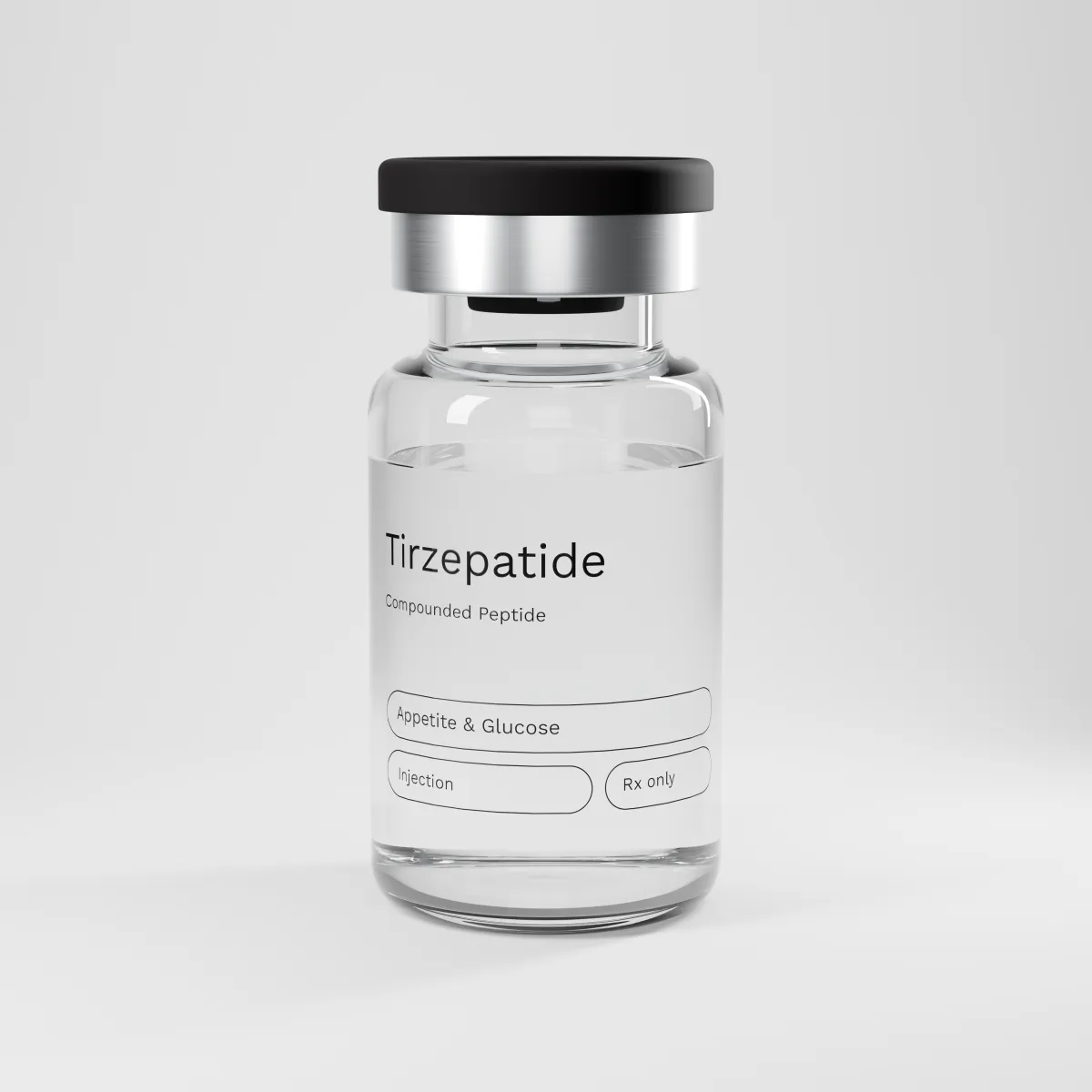
Tirzepatide Injection
Food noise down. Momentum up. Tirzepatide works on two appetite-related pathways to help you feel fuller and make weight care less of a daily tug-of-war.
- Quiet the food noise
- Feel fuller longer
- Appetite management
- Weight management
Prescription products need a short health questionnaire and a licensed provider’s approval. Your card is only charged if approved. Usually ships within 3 business days after your provider approves.
This medication is compounded by a licensed pharmacy. Compounded drugs are not FDA-approved and have not been reviewed by the FDA for safety, effectiveness, or quality.
What is Tirzepatide?
A medicine that helps regulate appetite and fullness through two pathways. The everyday benefit is less hunger and feeling satisfied longer while following a weight-management plan.
What's the right dose?
Follow the starting dose and any gradual increases on your prescription. More isn't a shortcut; eating enough, hydration and tolerability are part of the plan.
How do I use it?
Your clinician sets the injection plan. Nausea, constipation and vomiting can occur; severe abdominal pain needs urgent care.
Science & Evidence
Two appetite-related pathways.
Tirzepatide acts on GIP and GLP-1, which are involved in appetite and fullness. That mechanism alone does not prove outcomes for this compounded product.
View Study2,539 adults studied.
SURMOUNT-1 enrolled adults with overweight or obesity without diabetes. The trial tested branded weekly injections—not this compounded product.
View StudyProgress takes a plan.
The trial increased doses gradually. Your clinician guides dosing and follow-up; branded results do not establish this compounded product’s safety or effectiveness.
View Study
Month by month
What to Expect
Month 1
Set your starting point: appetite, nutrition and weight.
Month 2
Look for trends in fullness, food decisions and tolerability.
Month 3 to 6
Review progress and the routine behind it.
Month 6 & beyond
Build a longer-term plan that accounts for your response.
Results and timelines vary from person to person. Always follow your provider’s treatment plan.